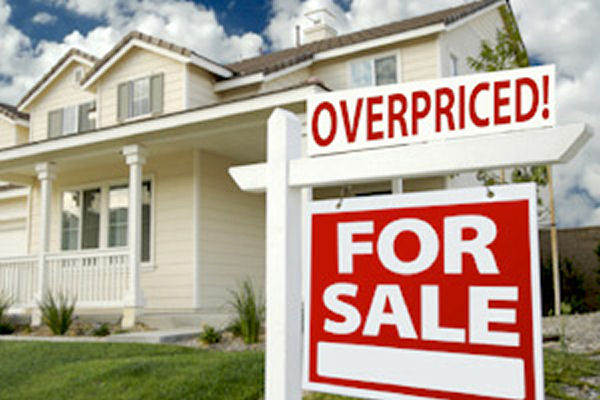
There’s a version of the overpriced listing conversation that every agent eventually has to have, and almost no one enjoys it. You’ve done your CMA honestly, the market is telling you one thing, and the seller is telling you something different — usually anchored to what their neighbor got three years ago, what Zillow says, or what they need for their next purchase to work.
The pricing conversation is one of the things that separates agents who have sustainable businesses from agents who are constantly chasing markets and managing unhappy clients. Getting it right is worth spending some time on.
The Mistake Most Agents Make
The most common mistake I see in forum discussions about this is treating the pricing conversation as a negotiation between the agent’s number and the seller’s number. It isn’t. Or rather, making it look like one is where things go wrong.
When you present a CMA and then present the seller’s preferred price as an alternative that you’re weighing against yours, you’ve implicitly told the seller that your CMA is your starting position rather than your professional conclusion. Now you’re in a negotiation, and the seller has no reason not to push toward their number.
The frame that works better: you’re not presenting competing numbers. You’re presenting what the market data shows, and then asking the seller whether they want to list within that range or whether they want to list above it with a clear plan for what happens if the market doesn’t respond. Both are choices. Neither is wrong as long as you’re honest about the trade-offs.
The Specific Language That Makes a Difference
One framing I’ve heard work well, shared by an agent in our forum with 20+ years of experience: “I can get this property on the market at $X, and I want to be honest with you about what the data says will happen. Properties priced in this range in this neighborhood are sitting 45-60 days and eventually selling for about 4-6% below list. If that’s the outcome, that’s a different number than you’re thinking about. I want to make sure we agree on whether that’s acceptable before we go live.”
What that does: it makes the outcome concrete and financial rather than abstract. “The market won’t support it” is easy to dismiss. “Here’s the specific price you’ll likely end up at after 60 days on market” is harder to wave away.
When the Seller Insists Anyway
There are sellers who hear everything you say and still want to list higher. This is actually fine. It’s their house and their right. What matters is how you handle it from there.
The agents who navigate this well usually do two things. First, they get explicit agreement upfront about what the price-reduction trigger is: “If we’ve had X showings in the first three weeks without an offer, we’re going to have a specific conversation about reducing. I’m not going to wait until the listing is stale — I’m going to call you.” Second, they make sure the listing agreement and their communication style leave them room to have that conversation without it feeling like a betrayal.
The ones who struggle are usually the ones who took the listing without having that conversation, and then feel they can’t bring up the price without it sounding like an “I told you so.”
On Taking Overpriced Listings at All
This is where experienced agents disagree, and both sides have reasonable arguments. Some experienced agents won’t take listings outside a certain range from their CMA on principle — the carrying costs, the damage to their reputation if the listing sits, and the client relationship damage when it eventually reduces aren’t worth the listing. Others will take them with the explicit understanding that the price conversation will continue throughout the listing period.
I’m not going to tell you which approach is right for your business. What I’ll say is that the agents who take overpriced listings without a clear plan for managing the price conversation are the ones who end up with six-month headaches and one-star reviews. The listing isn’t the problem. The lack of a plan is the problem.